What is Lean AI?

Build your people's capability now. Change the process with care.

Lean AI is using AI to build human capability to solve problems at speed, and to accelerate lean transformation.

Why now

AI is the same choice software was, moving faster.

Software was rarely designed with the value stream in mind. It optimized parts instead of enabling flow, and eroded teams' ability to improve their own work.

Adopted as a black box to automate tasks, AI will fragment the flow further and lock in the dysfunction already built into your systems. Adopted to build capability, it restores people's ability to see, improve, and change the work.

AI can make each layer adaptive again, if people understand the work, and the technology, well enough to guide it.
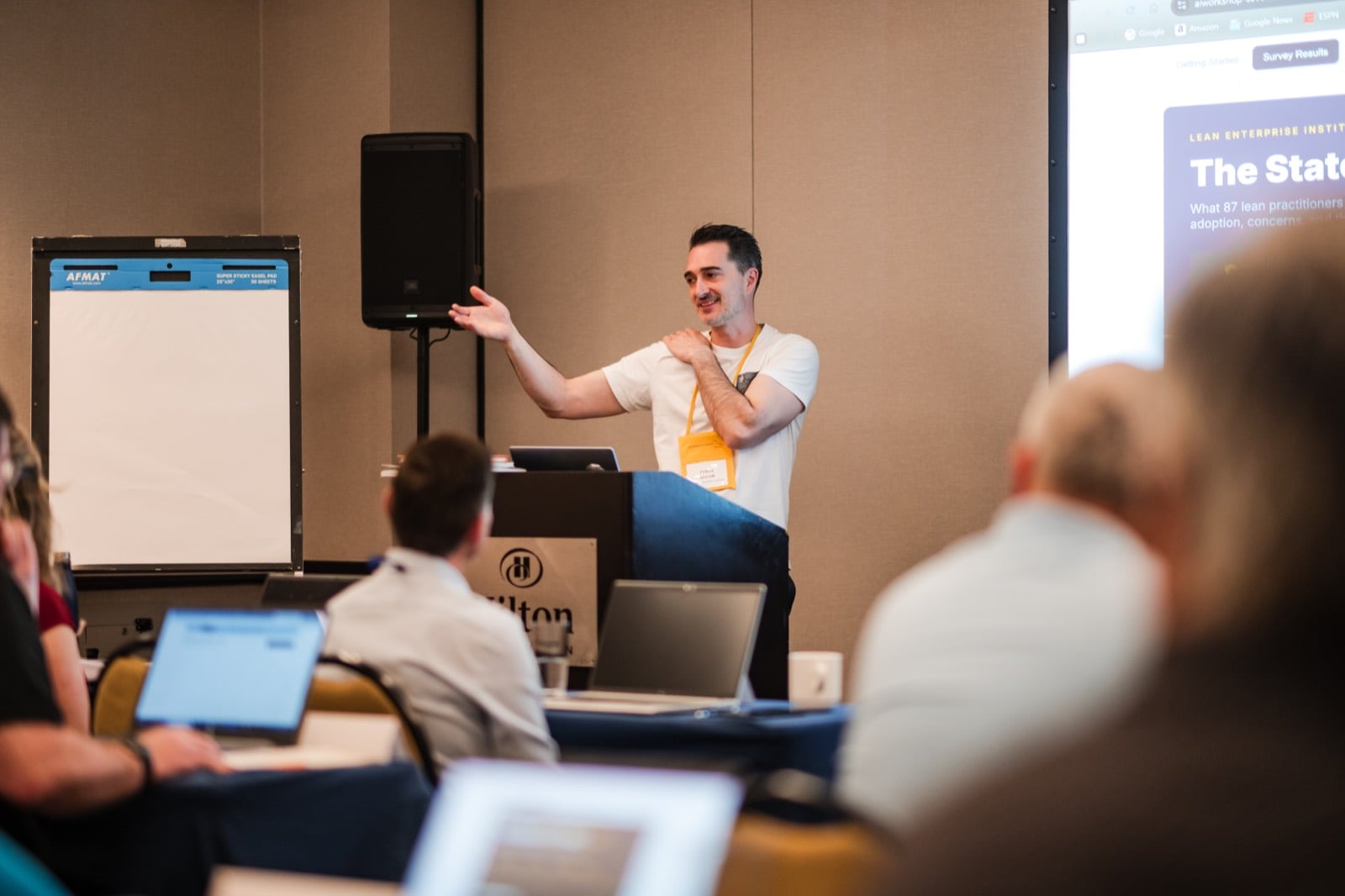
Tyson Heaton presenting the state of AI and lean to a room of practitioners

The principles

Nothing new. Lean, applied to AI.

The Toyota house stands on two pillars. Both are older than the computer, and both tell you where AI belongs.

flag

The precondition: leaders go first.

Nobody learns AI from the back of the room. Leaders don't need to build the enterprise's tools, but they should build for their own work, hands on. When they use AI in the open with their people, it becomes safe for everyone to experiment and share. And everyone needs a good coach, leaders included.

A wooden loom with a shuttle and woven cloth. Its threads run across into a laptop, where they become lines of code. One thread has broken, and the matching line of code has stopped and is flagged in gold.

pan_tool Jidoka: automation with a human touch

Stop and call a person.

Sakichi Toyoda's mother farmed by day and wove by night on a hand loom, and he set out to ease her work. Over decades of looms, his machines came to stop themselves when a thread broke, before the cloth went bad. No one had to stand watch, braced for the next break. One person could run several looms, with headroom to make them better.

Ask the same of any AI system you build. Can people see what it's doing, and why? Does it stop when something's off? Does it grow their ability to fix and improve the work, or pile on stress, with the technology taking the easy work and leaving people the cleanup, the edge cases, and the breakdowns?

groups Lean AI for Teams arrow_forward

double_arrow Just-in-time

What's needed, when it's needed.

The target is work that flows steadily at the pace of customer demand. Improving a step helps when it serves that.

Put AI where it takes variation out and moves the flow, and only where people know the work well enough to spot when it drifts. Start with the improvement work itself.

account_tree Lean AI for Value Streams arrow_forward

Under both: stable, standard work is the floor, and people are the center.

Lean AI in a transformation

The Lean Transformation Framework

Transformation isn't random. It requires answering five questions. Select a part of the house to explore it.

Framework by John Shook, Lean Enterprise Institute

flag
Purpose
build
Work
manage_accounts
Management
System
school
Capability
psychology
Basic Thinking & Mindset

Lean AI doesn't change the questions. It can speed up the transformation and extend what your people can do. Leave their capability for later, and you take on debt: the business gets more complex while the people running it get less able to change it.

Your turn

Try it on your own problem.

A prompt for your own AI. It coaches you through the five questions, asks where AI helps and where it hurts, and ends with the people you need to go see. Or bring the problem to a discovery session, and we'll walk it through the five questions with you.

The foundation

What is lean practice?

Lean practice is a way of understanding how work creates value and adapting as that value changes, with a discipline for improving the work every day. It's a way of seeing and a way of managing.

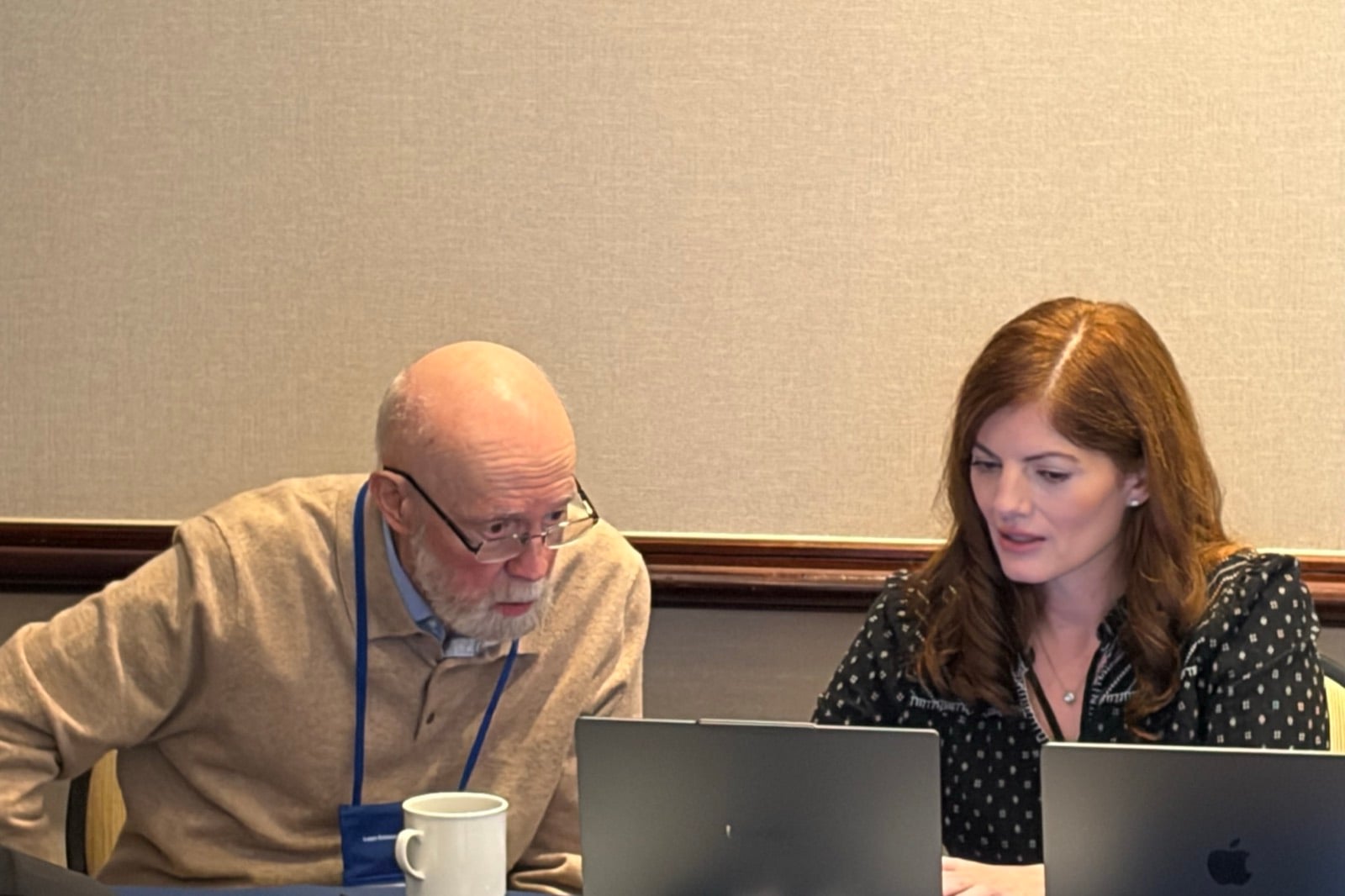
Jim Womack at a laptop with a colleague, working a problem with AI
Jim Womack, who founded LEI, working a problem with AI at a Lean AI session.

Go deeper

Ready to put Lean AI into practice?

We help leaders build organizations that keep improving, through coached practice on real problems.