account_tree Lean AI for Value Streams

The reengineering is coming. Do it with your people, not to them.

The organizations that come out ahead will move their own value streams toward an ideal they choose, led by their own leaders, with the people who do the work.

For leaders who answer for the results

Your work transformed, one target condition at a time. And the capability to keep doing it.

A person walking along a line of work stations with a notebook, a value stream map drawn on the wall behind them, one process box marked in gold.
speed

The gap

The step got faster.
The work still waits.

A step that took an hour now takes five minutes, and the work still sits in a queue for a week. Most of the lead time in a value stream lives between the steps, in the handoffs, the waiting, and the rework. Speeding up one step doesn't touch it.

Value stream mapping has always been about a better future state. What changed is what the ideal can be. Steps that needed a system project now need a week. Handoffs that existed because of old software can go away.
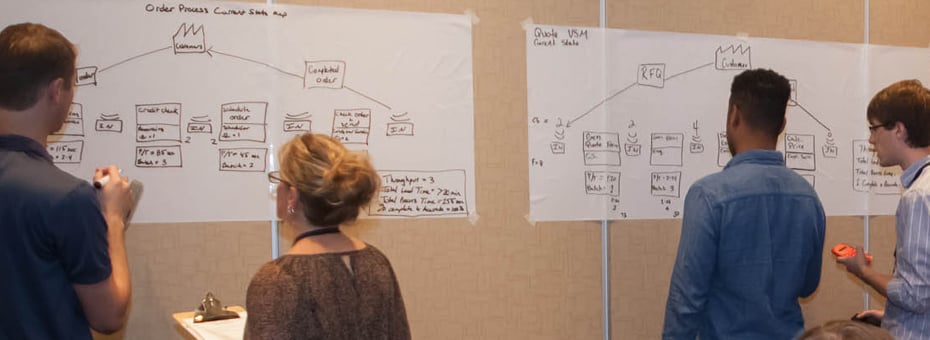
People at an LEI workshop mapping an order process and a quote process on paper value stream maps taped to the wall
An LEI workshop: value stream maps of an order process and a quote process.

How it works

Not a redesign. A direction and a rhythm.

Our coaches work beside your leaders, the people who manage the work, and the people who do it. Together they move toward the ideal one target condition at a time.

You can buy the tools. You can't buy the capability. Your people learn to lead change in their own value stream, and keep doing it after we leave.

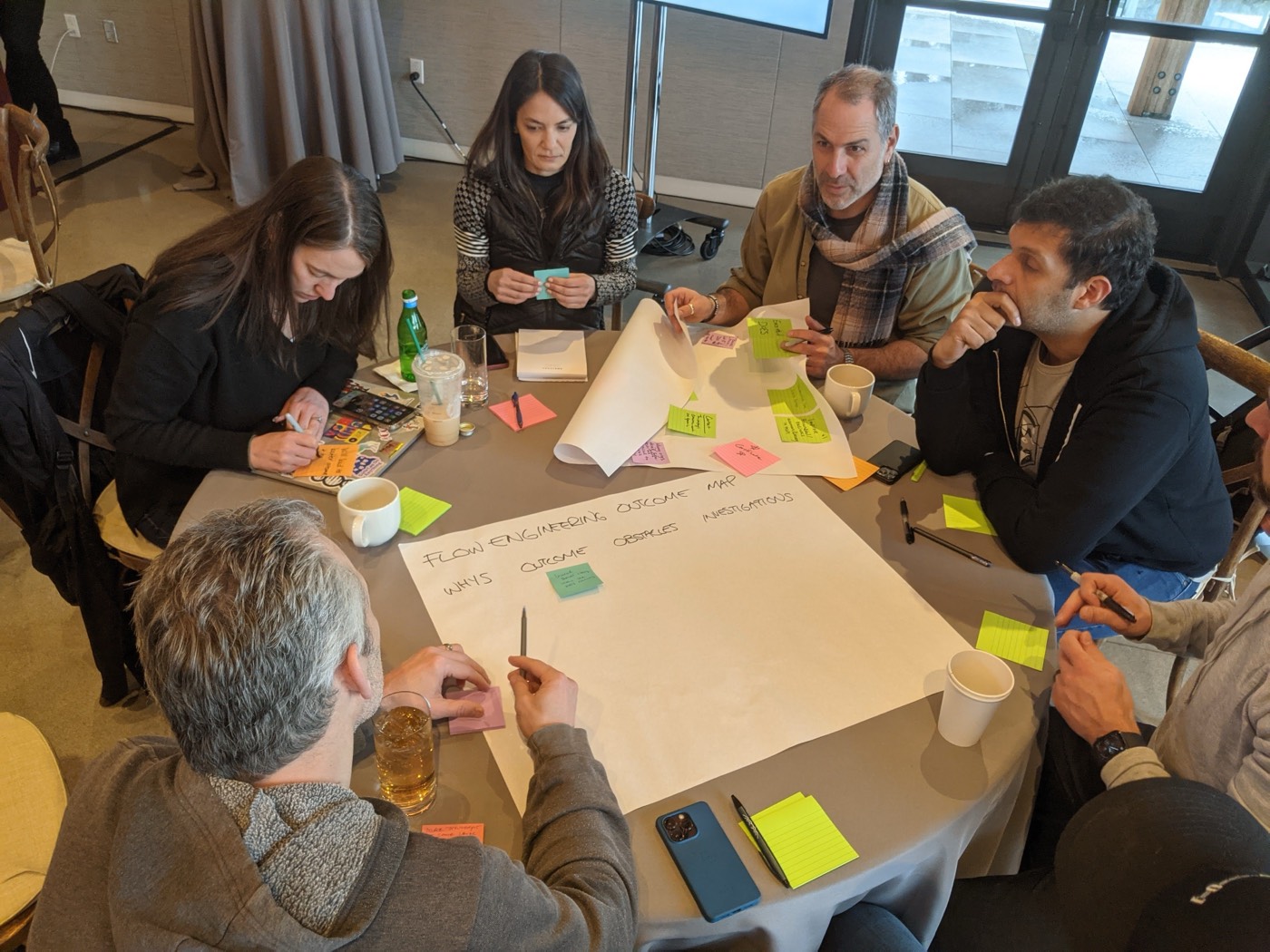
A team around a table drafting an outcome map on paper with sticky notes
A Flow Engineering session: the team starts with an outcome map.
my_location

Outcome

What should get better, and who would feel it: your customers, your business, your people.

visibility

Current state

Map how the work really flows today, with the people who do it and manage it. Find the constraint.

north_east

Ideal condition

The flow with no waiting. AI changes what that can look like. The direction, not the next target.

flag

Target condition

The next step toward the ideal, aimed at the constraint. Clear enough to know when you've arrived.

science

Experiment and learn

Try it, learn what the flow really does, then map it again. It has moved.

Then back to current state, and again

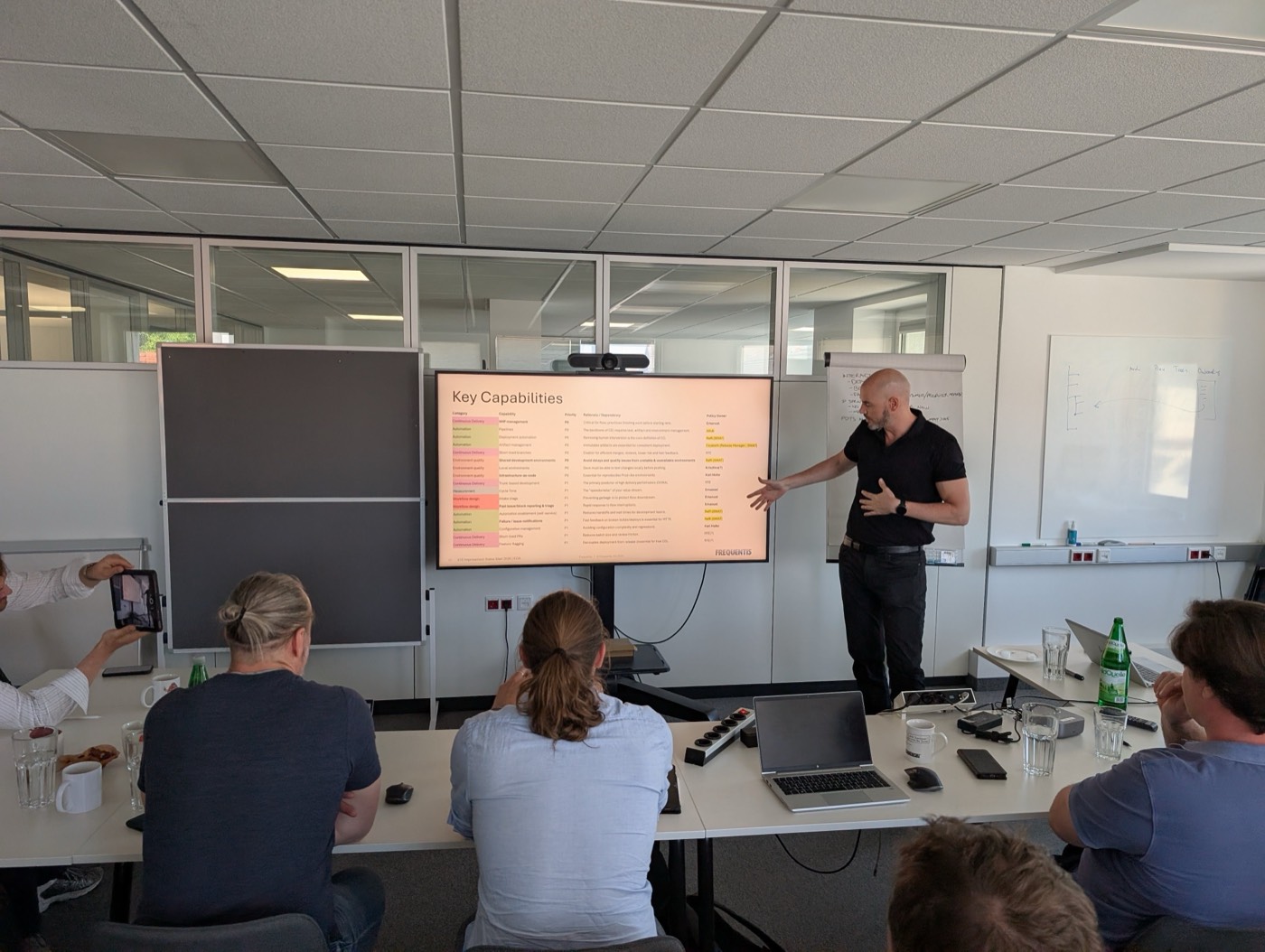
Steve Pereira walks a team through a key capabilities map on screen
Steve Pereira, one of our faculty, walking a team through a capabilities map.

Pick one thing and start: a product family in a plant, a set of outcomes and the workflow behind them in technology and knowledge work (what Steve Pereira, one of our faculty, calls Flow Engineering). Learn the basic measures that matter, then pick a focus. The method bends to the work. The aim is more value for your customers, and people who can keep improving the flow.

Runs through the whole loop

groups

Capability, built as you go

The part that compounds. Your transformation team and the people who do the work learn to use AI themselves: to see the flow, solve problems, and run experiments. Each loop leaves them better at the next one. Same work as Lean AI for Teams, done inside the value stream.

Change the process with care

Less technology, better placed.

AI is now the easiest thing to overproduce: agents nobody uses, automations on steps that shouldn't exist, tools that add complexity someone has to maintain. Lean shows you the difference. The map shows what the customer actually pulls.

Your people use AI everywhere to improve the work. AI goes into the work itself only where the flow pulls it, one target condition at a time, and becomes the standard only when it proves out. Many steps need a better standard, not a new tool. (The principle behind it: just-in-time.)

Where AI does go into the work, two things stay true:

manage_accounts

Leaders decide what it can see and change

The people accountable for the value stream set it, and keep setting it as the work changes. It's an ongoing job, not a setup step.

bug_report

When it goes off standard, a person responds

You can see when it drifts, not just whether the output looked fine, and someone knows it's theirs to fix. Like an andon: the signal is worthless without the response.

What we ask of you

Not sure you're ready? Call anyway. A hackathon on your own work is a low-key way to find out. For the full loop, this is what it takes.

check_circle

Your leaders in the work. Hands on AI in their own work, in the open, and out seeing the flow. Without that, the loop stalls, and we'll tell you if we see it.

check_circle

A plan for the capacity you free up. Not every target condition is about time; some are about quality or revenue. But many free people up. Decide up front what that time goes to. People show you how they really work only when it won't cost them their jobs.

check_circle

An appetite for the honest answer, including "not yet." We don't sell a readiness assessment and a roadmap. We find out together, on one real flow. The experiment is the diagnostic, and "not yet" is a real answer.

How we think about this

handshake

Bring one value stream. We'll walk it with you.

A direct conversation about one real flow, and what could change in it.

Talk about a value stream arrow_forward